
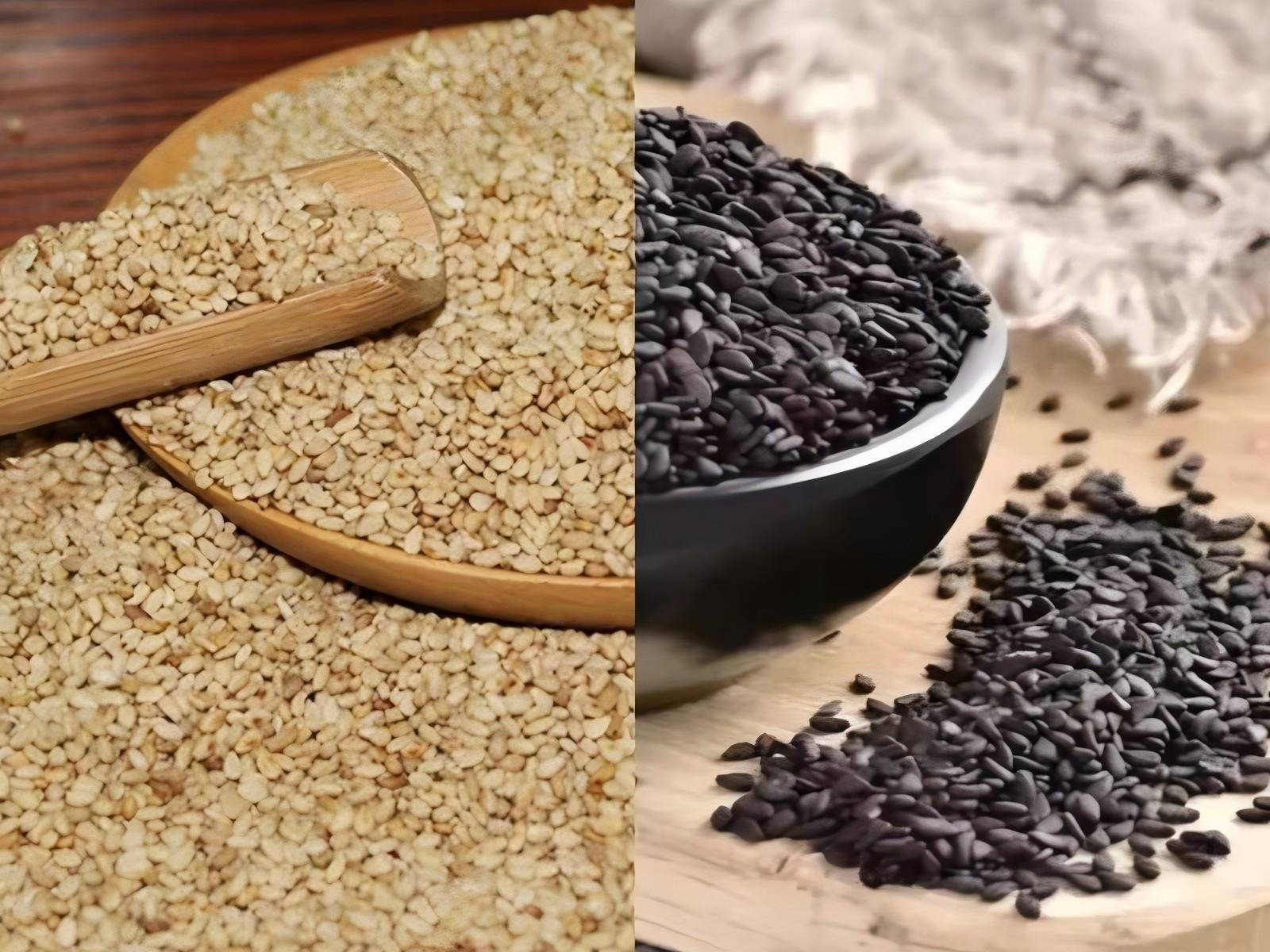
Black sesame and white sesame are common food ingredients in our daily lives, both rich in oil content. Although they may seem to differ only in color, as raw materials in food processing, they each have distinct characteristics and uses, with significant differences between the two. As a blogger specializing in the value of sesame, I will provide a detailed introduction to the differences and uses between Black Sesame vs White Sesame.
1. What are the main characteristics of black sesame and white sesame?
- Main characteristics of black sesame:
- 外観: Flattened oval shape, black surface, smooth or with net-like patterns.
- 栄養成分: Rich in high-quality protein, 脂肪, and carbohydrates, especially high in vitamin E and dietary fiber.
- Main characteristics of white sesame:
- 外観: Larger grains, bright white color, good taste, and a rich aftertaste.
- 栄養成分: Contains a large amount of fat, protein, ビタミン, and other nutrients.
2. What are the main production areas for black and white sesame in the world?
According to the book “High-Yield Sesame Cultivation Techniques”, sesame grows best in loose, well-drained soil with a pH between 6.0 そして 8.0. It’s ideal to choose soil rich in organic matter and essential nutrients like nitrogen, リン, and potassium. Sesame prefers abundant sunlight, and within a certain range, the more sunlight it receives, the better its growth and flowering. It requires little water, making it relatively drought-resistant.
- Main production areas for black sesame: China is the world’s most important producer of black sesame, with major production areas in Henan, Shandong, Anhui, hebei, Jiangxi, and Sichuan provinces. Particularly, Pingyu County in Zhumadian, Henan, is famous for producing black sesame and is known as the “Sesame Town of Central China.” Local news from Pingyu County frequently reports the booming black sesame industry, highlighting the region’s history, output, and quality of black sesame.
- Main production areas for white sesame: White sesame is grown widely, mainly in Asia, Africa, and Central and South America. Data from agricultural departments and market feedback show that these regions, with their unique climates and soils, have become important growing areas for white sesame, providing high-quality white sesame products to consumers globally.
3. What are the differences in their applications in the food industry?
Due to differences in flavor and texture, black and white sesame are processed into different food products. 黒ごま, with its dark appearance and rich flavor, is commonly used in pastries, desserts, and soy milk. さらに, black sesame is often pressed into oil for cooking or direct consumption.
White sesame, with its lighter color and distinct nutty flavor, is widely used in baking pastries and sauces. Based on my knowledge, I think white sesame is perfect for sprinkling on food to enhance both flavor and texture.
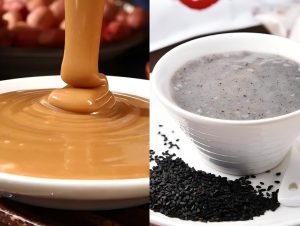
- Common black sesame products: Black sesame paste is perhaps one of the most well-known foods. Due to its rich nutrition, when roasted and finely ground into powder, it aids in bowel movements, nourishes the liver, and benefits the kidneys. Other products include black sesame balls and black sesame cookies.
- Common white sesame products: White sesame, due to its unique flavor, is often processed into sesame oil and sesame paste. The well-known “two-eight sauce” is a mixture of sesame paste and peanut butter in a 2:8 ratio, where the sesame paste is made from white sesame. White sesame paste differs from black sesame paste in color, 味, and aroma, making it better suited for mixing with peanut butter to achieve the unique rich flavor and smooth texture of two-eight sauce. したがって, I believe white sesame is an indispensable condiment.
4. What are the main differences between black sesame and white sesame?
- 色: Black sesame is dark black or dark brown, while white sesame is pale yellow or white.
- Nutritional Content: Both are rich in protein, 脂肪, ビタミン, そしてミネラル, but black sesame contains higher amounts of certain nutrients, such as insoluble dietary fiber, カルシウム, and vitamin E. さらに, black sesame is rich in anthocyanins, a natural pigment with strong antioxidant properties.
- 用途: 黒ごま, with its unique color and strong aroma, is commonly used in pastries, sweets, beverages, and health foods like black sesame paste and black sesame oil. White sesame, on the other hand, is more often used as a condiment or cooking ingredient, such as in sesame paste or sesame oil.
5. What are the commonalities between black sesame and white sesame?
- 栄養豊富: Both are high in protein, 脂肪, ビタミン (such as vitamin E), そしてミネラル (like calcium, マグネシウム, and iron), which are essential for human health.
- 酸化防止剤: Both contain antioxidant substances, such as vitamin E, which help eliminate free radicals in the body and slow down aging.
- Medicinal Value: In traditional medicine, both black and white sesame are believed to have certain medicinal properties, such as promoting bowel movement, nourishing the blood, and improving eyesight.
しかし, the greatest commonality between them is their wide range of use as food. Both can be used as seasonings to enhance the aroma and flavor of dishes and serve as main ingredients in various foods. Products like sesame paste, black sesame paste, and black sesame cookies are popular among consumers, while sesame oil is an essential cooking seasoning. さらに, they can be used in making noodles and fillings, providing more variety on the dining table. Whether it’s for breakfast, lunch, or dinner, 黒のゴマ, with its unique nutritional value and delicious taste, has become an important part of people’s diets.
6. Other Questions About Black and White Sesame
- Can they substitute each other as ingredients? In some cases, black sesame and white sesame can be substituted for each other, but it depends on the situation. First, they differ in taste, with black sesame having a stronger flavor and white sesame being milder. This may affect the final flavor of the product. Second, black and white sesame each have their own preferred uses. Black sesame is often used in pastries and sweets, while white sesame is more commonly used in cooking and baking. したがって, when substituting, you need to consider whether the flavor and purpose of the product are suitable.In summary, although black and white sesame can be substituted for each other in some cases, it’s important to base the decision on the specific recipe and personal preference. It’s advisable to carefully compare their taste and use to ensure the final product meets expectations.
- What are the differences in their nutritional value?
- Mineral content: Black sesame contains relatively higher mineral content, especially calcium, と 780 mg/100 g, which is 1.26 times that of white sesame. さらに, the potassium-sodium ratio in black sesame is more favorable for controlling blood pressure and maintaining heart health.
- Vitamin E content: Black sesame contains up to 50.4 mg/100 g of vitamin E, which is 1.33 times that of white sesame. Vitamin E is a powerful antioxidant that helps slow aging and protect cellular health.
- 食物繊維: Black sesame has more dietary fiber than white sesame, which helps promote bowel movement and prevent constipation.
- Unique components: Black sesame is rich in anthocyanins, which are powerful antioxidants that help protect cardiovascular health, while white sesame does not contain anthocyanins.
- Medicinal value: Black sesame has relatively higher medicinal value, offering benefits such as kidney nourishment, hair darkening, and anti-aging effects. White sesame, on the other hand, is mainly known for its ability to moisturize, promote bowel movement, and enhance beauty.
結論は, black sesame offers greater nutritional value in terms of minerals, ビタミンe, dietary fiber, and unique components compared to white sesame, and its medicinal benefits are more pronounced. しかし, white sesame also contains rich nutrients and certain medicinal properties, with both having their own advantages.