

Coques de graines de lin, souvent négligé dans l'industrie du lin, are packed with fibre, lignanes, et nutriments essentiels, making them valuable as a functional food ingredient and extraction raw material. Dans cet article, nous allons explorer:
✔ What is Flaxseed Hull?
✔ Are Flaxseed Hulls Edible?
✔ What Nutrients Are in Flaxseed Hull?
✔ How Are Flaxseed Hulls Processed?
✔ Flaxseed Hull Extraction Applications
✔ Where to Buy Flaxseed Hulls for Industrial Use
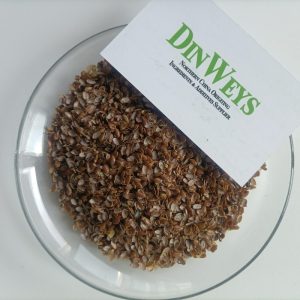
1. What is Flaxseed Hull?
Flaxseed hull (or flaxseed shell) is the outer protective layer of a flaxseed. It contains a high concentration of fibres alimentaires, lignanes, and micronutrients, which provide multiple health benefits and industrial applications.
Are Flaxseed Hulls Edible?
Oui, flaxseed hulls are safe to eat and are often included in dietary supplements and functional food products. Cependant, since they are high in insoluble fiber, consuming them in large amounts may cause digestive discomfort in some individuals.
Can You Chew on Flaxseed Hulls?
Flaxseed hulls are tough and fibrous, making them difficult to chew. Instead, they are usually ground into powder ou extracted to maximize their nutritional benefits.
What Vitamins Are in Flaxseed Hull?
Flaxseed hulls contain Vitamines B, en particulier B1 (thiamine), B6 (pyridoxine), and folate, which play essential roles in metabolism and cellular function.
2. Flaxseed Hull Nutritional Composition
Below is the nutritional profile of flaxseed hulls based on laboratory analyses from the USDA and published research (Zhang et al., 2022):
| Nutritif | Par 100g | Benefit |
|---|---|---|
| Fibres alimentaires | 48-52g | Supports digestion, gut health, and weight management |
| Lignanes | 1,200-2,500 mg | Powerful antioxidants with potential hormone-balancing effects |
| Protéine | 12-16g | Provides essential amino acids for body functions |
| Omega-3 (ALA) | 3-4g | Supports heart health and reduces inflammation |
| B1 (Thiamine) | 0.8-1.2mg | Essential for energy metabolism |
| B6 (Pyridoxine) | 0.3-0.5mg | Supports brain function and neurotransmitter production |
| Folate | 100-150 mcg | Important for cell growth and DNA synthesis |
| Calcium | 200-250mg | Strengthens bones and supports muscle function |
| Magnésium | 250-350mg | Essential for muscle relaxation and enzyme function |
Advantages of Flaxseed Hull as a Food Ingredient:
✅ High in fiber – Supports gut health and weight management.
✅ Rich in lignans – Potential antioxidant and hormone-balancing effects.
✅ Good source of omega-3 – Beneficial for cardiovascular health.
Disadvantages:
❌ Teneur élevée en fibres – May cause bloating or digestive discomfort if consumed in excess.
❌ Low digestibility in whole form – Must be ground or extracted for optimal nutrient absorption.
3. What Can Be Extracted from Flaxseed Hull?
Flaxseed hull is a valuable raw material for various extractions. Here’s a detailed list of what can be extracted, their extraction processes, and applications:
| Extrait | Processus d'extraction | Utilisations & Applications |
|---|---|---|
| Lignanes (Secoisolariciresinol Diglucoside, SDG) | ① Affûtage & tamisage flaxseed hull → ② Extraction par solvant (ethanol/water) → ③ Purification via chromatography | Functional food supplements, hormone balance, antioxidant products |
| Flaxseed Fiber | ① Mechanical separation → ② Hydrolysis to break down fibers → ③ Drying and packaging | Dietary fiber supplements, gluten-free baking ingredients |
| Flaxseed Hull Protein | ① Alkaline extraction → ② Isoelectric precipitation → ③ Freeze drying | Plant-based protein powders, functional foods |
| Omega-3 Oil (ALA) | ① Supercritical CO₂ extraction → ② Microencapsulation for stability | Nutritional supplements, functional oils |
| Phenolic Compounds & Antioxydants | ① Ethanol extraction → ② Filtration et concentration | Natural food preservatives, antioxidant skincare formulations |
4. How is Flaxseed Hull Processed?
Flaxseed Hull Processing Flowchart
1️⃣ Flaxseed Cleaning – Remove impurities (dust, pierres).
2️⃣ Dehulling – Mechanically separate the outer hull from the inner seed.
3️⃣ Tamisage & Tri – Separate hull fractions based on particle size.
4️⃣ Séchage & Milling – Air-dried and ground into powder or granules for further use.
5️⃣ Conditionnement – Stored in food-grade bulk bags or extract preparation containers.
Main Processing Technologies
Dry Mechanical Separation – Preserves nutrient integrity but has lower extraction yield.
Enzymatic Hydrolysis – Improves lignan and protein availability.
Supercritical CO₂ Extraction – Produces high-purity oil extracts with minimal oxidation.
5. How to Buy Flaxseed Hull for Industrial Use?
If you are looking to purchase high-quality flaxseed hulls for food processing, supplement production, or extraction, considérez ce qui suit:
📌 Quality Factors to Check:
✔ Lignan content (≥ 1,500 mg pour 100g)
✔ Moisture content (< 8%)
✔ Particle size (based on intended application)
✔ Heavy metal and pesticide-free certification
📌 Common Packaging & Minimum Order Quantities (Quantité minimale de commande):
Food-grade flaxseed hull powder: 20kg/bag
Lignan-rich extract: 1kg sealed packages
Industrial bulk shipments: 500kg – 1-ton super sacks
📌 Shipping & Stockage:
Cold storage required for lignan-rich extracts.
Standard temperature storage for hull powder or fiber.
📞 Contact Us for Bulk Flaxseed Hull Supply
For inquiries about bulk flaxseed hull purchases, custom extraction solutions, or supplier partnerships, CONTACT US
Conclusion
Flaxseed hull is a nutrient-dense byproduct with applications in nourriture, supplements, and industrial extractions. It is rich in fiber, lignanes, and omega-3s, making it a sought-after ingredient in health products and functional food formulations.
📢 If you’re a food manufacturer, supplement brand, or ingredient supplier looking for premium flaxseed hull, contact us for pricing and sample requests!