
Whether we’re strolling through the city square or in a neighbor’s garden; on a summer trip in Europe or in the countryside, the golden sunflowers are always around us. それで, what are the differences between ひまわりの種 for planting vs consumption we eat? Let me explain their distinctions.
What are Planting Sunflower Seeds? What is the Consumption of Sunflower Seeds?
Planting sunflower seeds and edible sunflower seeds differ in their uses and characteristics.
Planting sunflower seeds is primarily used for oil extraction, characterized by high oil content (30% に 45%). They have strong disease resistance and adaptability for various growing conditions.
Edible sunflower seeds are used for food processing and as snacks, known for their thin shells and thick kernels, rich in unsaturated fatty acids, ビタミン, および微量元素. They can be consumed directly or processed into various foods.
How to Distinguish Sunflower seeds for planting vs consumption?
To differentiate between sunflower seeds for planting and those for eating, consider their appearance, サイズ, processing methods, and chemical treatments.
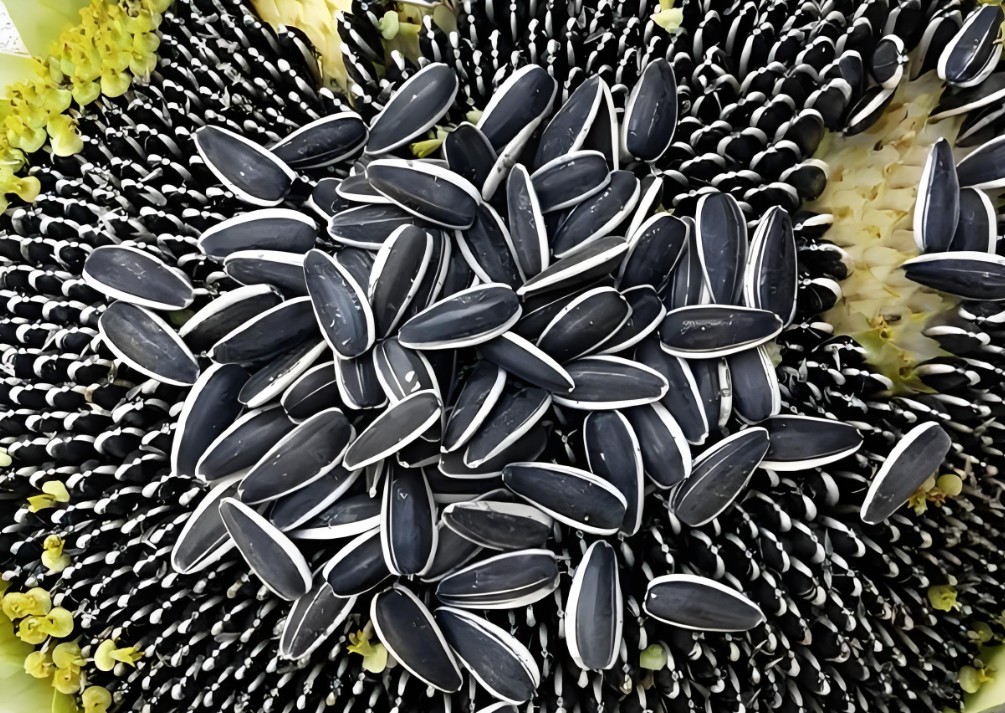
- Appearance and Size: Planting seeds are smaller, with thin black shells, while edible seeds are larger, with thicker gray-black shells and distinct stripes.
- Processing Methods: Planting seeds are unprocessed, while edible seeds undergo shelling and sorting for suitability.
- Chemical Treatments: Planting seeds remains natural, while edible seeds may undergo treatments to ensure safety.
Can Planting Sunflower Seeds Be Eaten?
はい, planting sunflower seeds can be eaten. They are nutritious and rich in unsaturated fatty acids, ビタミン, および微量元素. しかし, they should be consumed in moderation to avoid discomfort, especially for individuals with specific health conditions.
How to Choose Sunflower Seed Varieties?
When selecting sunflower seed varieties, consider their characteristics based on intended use:
- Edible Sunflower Seeds: Larger, with thicker shells and lower kernel yields, suitable for roasting or feeding.
- Oil seed Sunflower Seeds: Smaller, with high oil content, オイル抽出に最適です.
Also, factor in growing conditions and desired characteristics like early maturity or disease resistance when choosing varieties.
Can Both Planting and Consumption of Sunflower Seeds Be Used as Food Processing Ingredients?
Both planting and edible sunflower seeds can serve as food processing ingredients. Edible sunflower seeds undergo processes like cleaning, drying, shelling, and sorting to produce kernels that can be directly consumed or used in products like chocolate, cookies, and bread.
さらに, sunflower seeds can be processed into protein powder, which has good nutritional value and can be used in health foods like nourishing bread, plant-based meats, sausages, and canned goods. Sunflower meal is also an important raw material for the food industry, used in products like MSG and soy sauce. Sunflower shells can be used to extract food coloring and other nutrients. Thus, both types of seeds have broad applications in food processing.
Can Planting and Edible Sunflower Seeds Substitute Each Other?
Sunflower seeds are mainly categorized into oil seed and edible types. Oilseed sunflower seeds are primarily used for oil extraction, while edible sunflower seeds are meant for direct consumption.
Although they share similarities, there are significant differences in their uses. Oil seed varieties generally have higher oil content, making them suitable for oil production, whereas edible seeds focus more on taste and nutritional value.
さらに, differences exist in planting practices, such as seed coat and kernel ratios, and protein and oil content. したがって, while there may be some substitutability, overall, oil seed and edible sunflower seeds are not completely interchangeable.
What Are the Yield Differences Between the Two Types?
There is a significant yield difference between sunflower seeds for planting and those for eating. Globally, oil-seed sunflower seeds account for about 90% of total sunflower seed production, indicating that most seeds are used for oil extraction rather than direct consumption.
中国では, sunflower seed production mainly focuses on oil extraction, although there is some demand for edible seeds. 例えば, で 2017, その周り 1 million tons of domestic sunflower seeds were used for oil.
から 2015 に 2018, production of edible sunflower seeds remained stable at around 900,000 に 1 百万トン. Thus, both globally and in China, the yield of oilseed sunflower seeds significantly exceeds that of edible sunflower seeds.
Is There a Large Price Difference in Trade Between the Two?
はい, there is a considerable price difference between sunflower seeds for planting and those for eating in trade. Edible sunflower seeds typically have a higher price; 例えば, on Alibaba, prices range from 12.42 に 20.67 キログラムあたりの元. In contrast, seeds intended for oil extraction or planting are generally cheaper, with prices around 3.00 yuan per pound in markets like Baoding, そしてhebei, with an oil yield of approximately 40%-45%.
Market demand and supply can influence prices, leading to increases in sunflower seed prices due to rising demand for sunflower oil. 全体, edible sunflower seeds are usually priced higher than those for planting.
Is It True That the Cheaper the Sunflower Seeds, the Better?
Buying cheaper sunflower seeds doesn’t necessarily mean they are better. While lower-priced sunflower seeds may offer a higher cost-performance ratio, consumers should consider multiple factors when making a purchase, including brand, production date, and quality.
Choosing well-known brands and fresh sunflower seeds can ensure product quality. さらに, reputable distributors and official channels often provide better nutritional and processing value. したがって, when purchasing sunflower seeds, it’s important to consider factors such as price, brand, and quality, rather than just focusing on the price.