
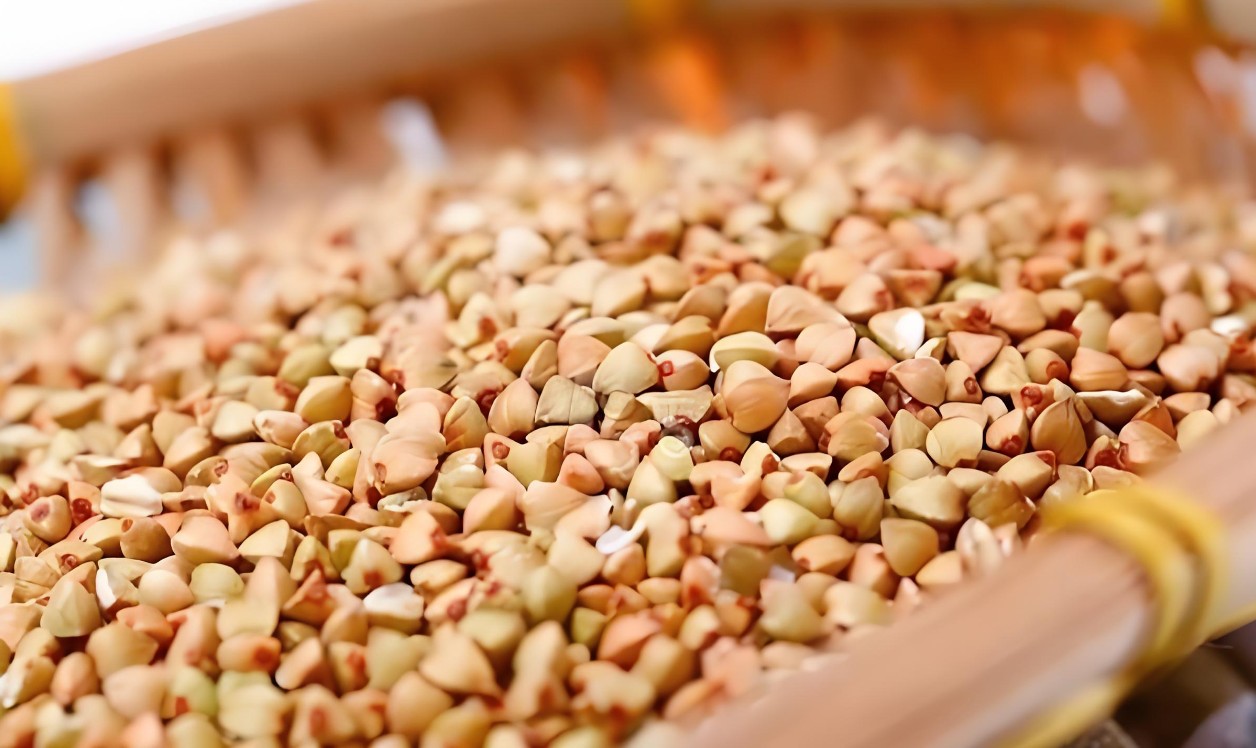
Buckwheat is a food that can be purchased in our daily lives, including different varieties such as red buckwheat and green buckwheat, all of which belong to the buckwheat product series we produce and process. Buckwheat is a low-carb food with unique nutritional value and health properties, rich in dietary fiber. したがって, consuming buckwheat regularly and in moderation is beneficial for human health. Many people often think of buckwheat as a type of grain; however, it is actually classified as a seed, not a grain. 今日, we will delve into this topic and explore the unique aspects of buckwheat, as well as how it differs from grains and other seed crops.
Why is Buckwheat Considered a Seed and Not a Grain?
First, we need to clarify the definitions of grains and seeds.
穀物 refer to plant fruits that are rich in starch and serve as a major food source for humans, such as wheat, barley, oats, and corn. These grains are not only a source of staple food but also widely used in animal feed and industry. Grains are rich in carbohydrates, proteins, fats, and various minerals and vitamins, making them an indispensable part of human diets.
Seeds are structures produced by plants for reproduction that have a certain vitality and ability to germinate. Seeds contain the embryo and endosperm (or cotyledons) and store sufficient nutrients to support germination and early growth.
From a definitional standpoint, そば (scientific name: ソバ) belongs to the Polygonaceae family and is not classified under the Poaceae (grasses) family. したがって, from a botanical classification perspective, buckwheat is categorized as a seed rather than a grain.
さらに, the botanical characteristics of buckwheat further support this classification. Buckwheat has a slender upright stem, with many branches, and its leaves are triangular or ovate-triangular in shape. The inflorescence is a racemose or panicle type, with flowers that are usually white or pale pink. Its fruit is a triangular achene covered with small protrusions, clearly distinguishing it from the morphology of Poaceae grains.
In terms of production and harvest, buckwheat has a relatively short growth cycle, strong adaptability, and drought resistance, thriving in various soil types. This makes buckwheat an important short-season crop, particularly suitable for crop rotation and intercropping. During harvest, the achenes naturally fall off, and they are collected through mechanical or manual means for processing.
Other Seeds Commonly Mistaken for Grains
In addition to buckwheat, there are other seed crops that are often mistaken for grains. 例えば:
- キノア: キノア is a seed from the amaranth family, originally from South America. It is small, comes in various colors (白, 赤, black), and is rich in high-quality protein, dietary fiber, and various minerals, earning it the title of “superfood.” Quinoa is widely cultivated, and its varieties differ across regions. Although it shares similar taste and uses with some grains, it is classified as a seed crop.
- Chia Seeds: Chia seeds are from the mint family, originating in Mexico. They are rich in Omega-3 fatty acids, dietary fiber, および抗酸化物質, making them a healthy snack choice. Chia seeds expand in water, forming a gel-like texture, and are commonly used in drinks and salads. Despite their popularity in the market, chia seeds are not classified as grains.
Differences Between Seed Crops and Grains as Food
全体, seed crops and grains have distinct characteristics and advantages as food sources.
- Seed Crops:
- Examples: そば, キノア, chia seeds, 等.
- 特徴: Seed crops are typically rich in high-quality proteins, dietary fiber, minerals, and vitamins. They usually have lower carbohydrate content, making them suitable for those seeking low-carb diets. Seed crops also offer diverse textures and flavors to meet various dietary preferences.
- 穀物:
- Examples: 小麦, rice, トウモロコシ, 等.
- 特徴: Grains are one of the primary sources of staple foods, rich in carbohydrates, proteins, and fats. They have high energy density and satiety, making them a main energy source in daily diets. Grains tend to have stable textures and flavors, making them easy to process and store.
Taking buckwheat and millet as examples, let’s delve deeper into their nutritional differences:
| Food Type | Dietary Fiber Content (100gあたり) | タンパク質含有量 | Fat Content | Vitamin Content | Mineral Content | その他の栄養素 |
|---|---|---|---|---|---|---|
| そば | 高い (approximately 6.5g) | Contains various essential amino acids | Low, rich in unsaturated fatty acids | Rich, contains B vitamins, 等. | Rich, contains calcium, 鉄, カリウム, selenium, 等. | Flavonoids, rutin, 等. |
| アワ | Low (approximately 3.4g) | Higher than rice, flour | Relatively high, contains unsaturated fatty acids | Rich, contains B vitamins, ビタミンe, 等. | Rich, contains calcium, カリウム, 鉄, 亜鉛, 等. | – |
In comparison, as food, buckwheat has greater nutritional value than wheat and is more beneficial to human health.
What are the Characteristics of Buckwheat Compared to Other Grains?
Compared to other grains like wheat, buckwheat stands out for its rich nutritional content and unique taste. As shown in the table below, buckwheat also has significant advantages in terms of production, consumption, and processing.
| Aspect | Buckwheat Advantage | 小麦 |
|---|---|---|
| 生産 | ||
| Planting Cycle | Short, suitable for quick planting and harvesting | Relatively longer cycle |
| Adaptability | Strong, can grow in various soil types, suitable for diverse environments | Relatively weak, requires specific soil and climate conditions |
| Cold, Drought, and Poor Soil Resistance | 高い, maintain good yield and quality in harsh environments | Low, significantly affected by environmental conditions |
| Crop Rotation and Intercropping | Suitable, an important short-season crop that helps improve soil and ecological diversity | Less suitable, not as flexible as buckwheat |
| Consumption | ||
| 食物繊維 | 高い, promotes gut health and digestion | より低い, not as rich as buckwheat |
| タンパク質含有量 | 高い, contains various essential amino acids, high nutritional value | High but lacks the variety of amino acids found in buckwheat |
| Taste and Aroma | Unique flavor, suitable for making various dishes | Soft, sweet flavor |
| Product Processing | ||
| Processing Methods | Diverse, can be made into various foods to meet different needs | Diverse, but not as rich in variety as buckwheat |
| Nutrient Retention | Good, minimal nutrient loss during processing, maintains nutritional value | May experience some nutrient loss during processing |
| Stability and Antioxidant Properties | Good, can extend shelf life and maintain flavor stability | Varies depending on processing and storage conditions |
Buckwheat has a short planting cycle and strong adaptability, allowing it to maintain high yield and quality in various soils and harsh conditions. It is also suitable for crop rotation and intercropping.
In terms of consumption, buckwheat is high in dietary fiber and protein, rich in minerals and vitamins, and has a unique taste that meets diverse culinary needs. During processing, buckwheat retains most of its nutrients and has good stability and antioxidant properties, extending food shelf life. したがって, compared to other grains like wheat, buckwheat has comprehensive advantages.
What are the Characteristics of Buckwheat Compared to Other “Pseudo-Grains”?
When compared to other seed crops like quinoa and chia seeds, buckwheat has unique characteristics in terms of nutrition, 価格, and usage scenarios.
| Aspect | そば | キノア | Chia Seeds |
|---|---|---|---|
| Nutritional Content | Balanced and comprehensive, タンパク質が豊富な, dietary fiber, minerals, and vitamins, contains unique bioactive components (like rutin) | High in protein, rich in various amino acids, 特に 9 essential amino acids | High in dietary fiber, rich in antioxidants like Omega-3 fatty acids |
| Nutritional Advantages | Balanced nutritional components with unique bioactive functions (rutin helps lower blood pressure), significant health benefits | High protein content, suitable for vegetarians and fitness enthusiasts | Rich in Omega-3 fatty acids, beneficial for heart health |
| 価格 | About 5-10 yuan/kg (varies by region and quality) | About 20-40 yuan/kg (fluctuates with quality and origin) | About 50-100 yuan/kg (higher-quality chia seeds are more expensive) |
| Price Advantage | Competitive in the market, suitable for daily consumption | ||
| Usage Scenarios | Staple food (like buckwheat noodles), side dishes, delicacies (like buckwheat pancakes), drinks (like buckwheat tea), flexible in cooking | Staple food (like quinoa rice), salads, side dishes, suitable for various cooking methods | Soaked for drinks, used in beverages, added to baked goods |
| Adaptability | Meets diverse tastes and health needs, various cooking methods, easy to digest | Highly adaptable, suitable for various people, but needs to be consumed in moderation | Suitable for health-conscious consumers and nutritional supplementation |
As seen from the table, そば, キノア, and chia seeds each have their unique features. そば, as a herbaceous seed of the Polygonaceae family, is known for its rich starch and high dietary fiber content, with multiple benefits such as cough relief, lipid reduction, and detoxification.
Compared to quinoa and chia seeds, buckwheat is more suitable for those with diarrhea, poor appetite, or gastrointestinal issues, and is more affordable, making it competitive in the market for daily consumption.
Its pleasant aroma and easy digestibility make it a special ingredient in regions like Northwest China and high-altitude areas. しかし, those with low blood sugar, spleen and stomach deficiencies, or gastric ulcers should avoid consuming buckwheat.
したがって, buckwheat stands out as a seed crop with significant advantages in nutritional value and health properties. Compared to other grains and seed crops, buckwheat is not only unique in flavor and versatile in food processing, but also shows effectiveness in lowering blood sugar and lipid levels, preventing cardiovascular diseases, and can be widely cultivated globally at an affordable price.
Thus, from any perspective, buckwheat is worth our deep understanding and promotion. In the future food market, buckwheat is expected to become a preferred choice for more consumers seeking a healthy lifestyle.