

Sunflower seeds are one of the common food ingredients. They are nutritious, nutty-flavored seeds that we often encounter in daily life. They can be roasted into various flavors, or eaten raw. But first, let’s understand what sunflowers are.
What is a sunflower?
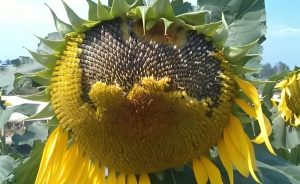
From a professional perspective:
Other names: Sunflower, longyangzi, xiangyanghua, wangrikui, zhaoyanghua, zhuanrilian, etc.
Family: A herbaceous plant belonging to the Asteraceae family, Helianthus genus.
Aussehen: The stem is upright and tall, sometimes reaching several meters. The leaves are heart-shaped, Grün, and rough. The flowers are large and bright, usually vibrant golden yellow, resembling the sun.
Now that we understand the sunflower, let’s take a closer look at sunflower seeds.
1. What are sunflower seeds, and what is their yield?
Sunflower seeds, also known as melon seeds, are the fruit of the sunflower, used for both food and oil extraction. They consist of the shell (husk) and the seed, which includes the seed coat, two cotyledons, and the embryo.
Yield of sunflower seeds:
The yield varies based on factors such as variety, farming techniques, and climate conditions. Typischerweise, one mu (um 0.067 hectares) can produce 500 Zu 1000 jin (around 250-500 kg) of seeds, with high-yield regions reaching up to 140 kg per mu. In 2024, the sunflower seed production in the EU’s 27 member states is expected to be 8.9 million tons, a slight decrease from 9.8 million tons in 2023.
2. What are the classifications and main uses of sunflower seeds?
Sunflower seeds can be classified into three main categories based on their use:
Edible type: These seeds are large, with thick shells, and typically have an oil content of 40-50%. The seeds often have black shells with white stripes, like the LD9102 variety, which is disease-resistant, high-yield, and of good quality. The yield per mu ranges from 80 Zu 150 kg. The oil extraction rate is around 40-50%, meaning about 0.2-0.25 jin of oil can be extracted per jin of seeds. These seeds are popular as a snack due to their large size and good taste and are also used to extract edible oil, rich in unsaturated fatty acids that are beneficial for health.
Oil seed type: These seeds are smaller, plump, with thin shells, and have a high kernel content of 65-75%, with an oil content of 45-60%. The shells are usually black or striped gray, ideal for oil extraction. Zum Beispiel, the variety Longkui Z9 is an early-maturing oil seed hybrid with a growing period of about 104 Tage. It has an oil content of 42.97% and a kernel rate of 74.6%.
Dual-purpose type: These sunflower seeds can be both eaten and used for oil extraction. This type of sunflower seed has a high oil content, typically over 40%, with a fragrant, pure oil quality. The seeds are rich in unsaturated fatty acids, such as linoleic acid and oleic acid, which are beneficial to human health. Zusätzlich, other parts of the sunflower, such as the flower disc, stems, and shells, can be used as industrial raw materials. Dual-purpose sunflowers are valued for their multifunctionality and economic potential.
Zusammenfassend, sunflowers and their seeds are not only important for food and oil, but also have significant agricultural and industrial value.
3. Main Sunflower Seed Producing Regions in the World and Their Advantages
| Region | Vorteile |
|---|---|
| China | Inner Mongolia is recognized as one of the world’s prime sunflower-growing regions, with stable yields, large, plump seeds. Xinjiang also has ideal latitude, long sunshine hours, and temperature variations conducive to growth. |
| Russia | Russia has vast farmland and suitable climate conditions, making it one of the world’s leading sunflower seed producers. |
| Ukraine | Ukraine boasts large areas of arable land and favorable climate, making it a major global sunflower seed producer and exporter. |
| Romania | Romania has ideal latitude, long sunshine hours, and significant temperature differences between day and night, which lead to stable yields and larger, fuller sunflower seeds. |
| Argentina | Argentine farmers are incentivized by zero export taxes and peso depreciation, leading to a rise in domestic sunflower seed prices and increased planting activity. |
4. Sunflower Seed Production by Country and Main Varieties
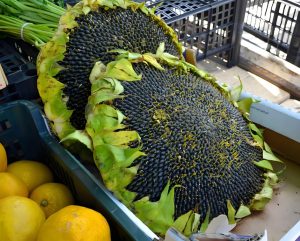
China: Inner Mongolia’s Hetao Plain is one of the best places globally for sunflower cultivation, with an annual planting area of over 4 million mu (approx. 267,000 hectares), producing over 800,000 tons of seeds annually. Varieties include 363, 3638, Fengkui, Qinghua, etc.
Ukraine: Ukraine is the world’s second-largest producer, with a production of 1,311,043 tons in 2022. It accounts for nearly 60% of global sunflower seed output and 78% of global sunflower oil exports.
Russia: Russia, another major producer, averaged 13.81 million tons from 2018 Zu 2020, accounting for 26.21% of global production, with exports to various countries.
Romania: Romania has the largest sunflower-growing area in Europe, with an annual planting area of about 1 million hectares and a yield of 3.16 million tons in 2017. 60% of the seeds are exported. Varieties include Romsun52 and Romsun53.
Argentina: In 2016, Argentina’s sunflower seed production reached a five-year high, with a planted area of 1.5 million hectares.
Are Wild Sunflower Seeds Better Than Cultivated Ones?
5. The quality comparison between wild and cultivated sunflower seeds can be assessed from different perspectives:
Flavor: Wild sunflower seeds often retain more natural characteristics, which may provide a more authentic taste compared to cultivated ones that might lose some flavor due to selective breeding.
Nutritional Value: Both wild and cultivated sunflower seeds are rich in nutrients like unsaturated fatty acids, Vitamin E, Eisen, and zinc. While there isn’t conclusive evidence that wild seeds have significantly higher nutritional value, wild plants may be more resistant to environmental stress, potentially retaining higher nutrient content.
Resilience: Wild sunflower seeds tend to be more resilient to extreme conditions and contain valuable genes for breeding purposes, making them potentially superior in terms of adaptability and resistance. Jedoch, wild sunflower seeds generally have lower yields, and harvesting them may face legal or environmental limitations, making their widespread use less practical.
6. Characteristics of China’s Sunflower Seed Industry
China’s sunflower seed industry has several notable features:
- Production and Distribution: Sunflower seeds are an important economic and oilseed crop in China, mainly grown in the Northeast and Northwest regions. In recent years, annual production has exceeded 2 million tons, mit 89% of production coming from the western regions.
- Industry Chain: China has a well-established industry chain, from cultivation, harvesting, and processing to sales. Technological innovation, such as the development of high-quality domestic sunflower seed varieties, has improved planting efficiency.
- Sorten: “Wuyuan Sunflower Seeds” from Wuyuan County account for over 60% of the national market and are listed as a national specialty product.
- Market Demand and Trade: Sunflower seeds are mainly used for oil extraction, with the edible seed market remaining stable. Packaging and consumer demand for sunflower seeds have been growing, contributing to trade surpluses in the industry.
- International Competitiveness: China’s sunflower seed industry remains competitive in the international market, benefiting from well-developed infrastructure and export potential.
7. How to Buy the Best Sunflower Seeds in China?
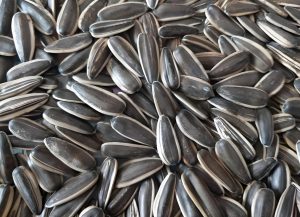
To purchase the best sunflower seeds in China:
- Choose Reputable Brands: Popular brands include ChaCha sunflower seed, Sanpangdan, Xudong, Huaweiheng, and Laojiekou. These brands are known for strict quality control.
- Consider the Origin: The top production regions in China are Inner Mongolia, Heilongjiang, Xinjiang, Jilin, Liaoning, and Hebei. Seeds from regions like Bayannur, Beitun, Huaian, Zhaozhou, and Wuyuan are highly prized for their flavor and quality.
- Check Customer Reviews: Reviews can provide insight into quality and taste. Zum Beispiel, some consumers highly recommend “Bibizan original flavor sunflower seeds” for their fullness and crisp texture.
- Assess Shape and Appearance: Look for uniform, plump seeds with natural luster. Avoid seeds with cloudy shells or black spots, which could indicate poor quality or spoilage.
8. Storing Sunflower Seeds
Proper storage of sunflower seeds involves:
- Drying and Sealing: Ensure seeds are dried to a moisture content below 18%. Store in airtight plastic bags or containers in a cool, dark place.
- Refrigeration: For shelled or processed seeds, refrigeration, or freezing helps prevent spoilage and extend shelf life.
- Avoid Light and Pests: Keep seeds in a dry, ventilated space, away from direct sunlight and moisture. Regular checks every 15 days help maintain quality.